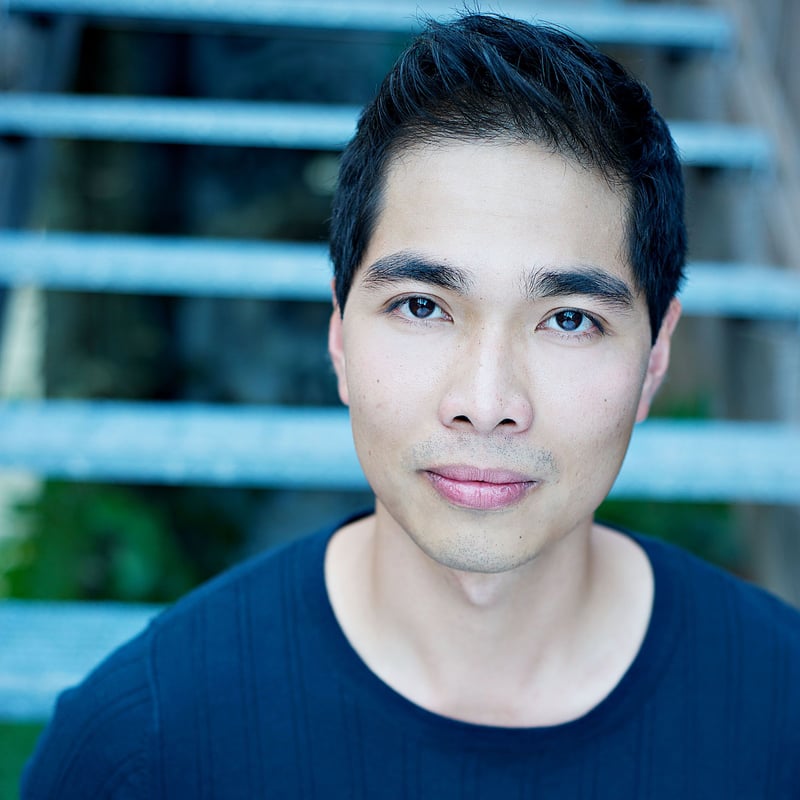
"William is very knowledgeable and his experience makes the difference."
William's Musical Journey
Tenor William started singing and performing as a young child, but the thought of becoming a full-time musician did not occur to him until he was in college. While pursuing a degree in Psychology at the Ateneo de Manila University in the Philippines, he joined the Ateneo College Glee Club and went on a victorious series of competitions and concerts in Europe. This experience led him to discover the joys of classical music. Realizing his potential as a soloist, he studied voice under locally renowned teachers Maestra Salvacion Oppus-Yñiguez and Dr. Antonio Hila.
Upon finishing his first undergrad degree, he moved to the US to pursue a Bachelor of Music degree in Voice at the renowned Indiana University Jacobs School of Music, with a Dean's Merit Scholarship. He studied with vocal pedagogue Dr. Robert Harrison, and continued further in obtaining a Master of Music degree before moving to Philadelphia to serve his residency as an Emerging Artist at the Center City Opera Theater.
He has performed for various opera companies including Brandywine Baroque, Boston Lyric Opera, Opera Philadelphia, St Petersburg Opera, New York City Opera, dell'Arte Opera, Prismatic Arts Ensemble, Opera Libera, Opera MODO, Poor Richard's Opera, Center City Opera Theater, Opera New Jersey, and Opera in the Ozarks. He has portrayed a wide variety of operatic roles including Roméo in Gounod's Roméo et Juliette, Anfinomo in Il Ritorno d'Ulisse, Oronte in Alcina, Rinuccio in Gianni Schicchi, Nemorino in L’elisir d’amore, Pedrillo in Die Entführung aus dem Serail, Gastone in La Traviata, Mayor Upfold in Albert Herring, Gherardo in Gianni Schicchi, and Guillot de Morfortaine in Manon. He has also appeared as a concert soloist with the Philadelphia Orchestra, the Chamber Orchestra of Philadelphia, Symphony in C Orchestra, the Philadelphia Singers, and the Philadelphia Symphonic Choir, with whom he can be seen in the Academy Award nominated film entitled Maestro.
William combines his background in psychology with his musical training in his teaching. His approach to teaching piano combines the discipline of musical training with the multi-faceted learning theories borrowed from the psychological field. Students are guided in progressively building both technical and musical skills in keyboard playing, while encouraging them to enjoy and love the music they are performing. His overall approach in vocal instruction is patterned after sports training such as those received by athletes, physique/body builders, and dancers. Students are guided in progressively building up their command of their vocal instrument, given its physical, mental, psychological, and ultimately, artistic capabilities. While classical repertoire is the foundation of this training, students are also encouraged and guided in applying the skills they learn to genres that most appeal to them, may it be pop music, musical theater, choral music, and so on.
I guide my students in applying the skills they learn to genres that most appeal to them.